Types of Fuses
Cartridge Fuse

Enclosed in a cylindrical casing with metal caps at both ends.
- Domestic appliances
- Industrial machinery
- Automotive applications
Rewirable Fuse

Also called Kit-Kat fuse—allows the fuse wire to be replaced.
- Domestic wiring systems
- Cost-effective solution
- User-replaceable element
MCB vs MCCB
MCB
Miniature Circuit Breaker

- Current: Up to 125A
- Voltage: Up to 1000V
- Used in: Homes, small offices
- Protects: Lighting, sockets, appliances
Fast, automatic protection for residential circuits
MCCB
Molded Case Circuit Breaker
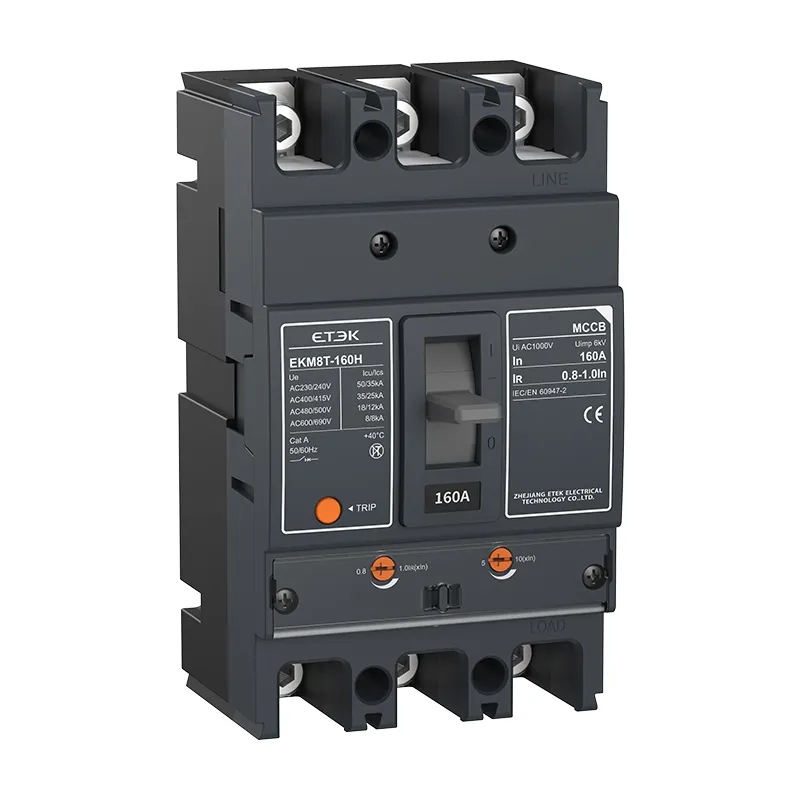
- Current: Up to 2500A
- Voltage: Up to 1000V
- Used in: Industries, large buildings
- Protects: Motors, transformers, machines
Adjustable trip settings for industrial applications
VS
Understanding Relays
A relay is an electromechanical switch that controls a high-power circuit using a low-power signal. It provides isolation between control and output circuits.

Key Function: Allows low voltage/current circuit to control much higher voltage/current circuit without direct connection
Common Types:
- Electromagnetic Relay (EMR): Basic mechanical switching
- Solid State Relay (SSR): No moving parts, fast, silent
- Thermal Overload Relay: Protects motors from overheating
- Time Delay Relay: Delayed operation for automation
Applications: Motor control, automation systems, power control circuits, signal switching
SPD Protection
An SPD protects electrical equipment from transient overvoltage events like lightning strikes, power line disturbances, or switching surges.

Real Scenario: A 240V surge from nearby lightning rode straight into your electronics expecting 120V. Without an SPD at your service entrance, that surge destroyed your equipment.
How it Works:
- Senses abnormal voltage levels
- Diverts excess energy to ground
- Responds in nanoseconds
- Returns to normal after surge passes
Three Types:
Type 1: Service entrance (lightning protection)
Type 2: Distribution panel (whole-building protection)
Type 3: Point-of-use (individual sensitive devices)
Type 1: Service entrance (lightning protection)
Type 2: Distribution panel (whole-building protection)
Type 3: Point-of-use (individual sensitive devices)
Ground Fault Protection
A GFCI (Ground Fault Circuit Interrupter) or RCD (Residual Current Device) protects people from electric shock by detecting current leakage.
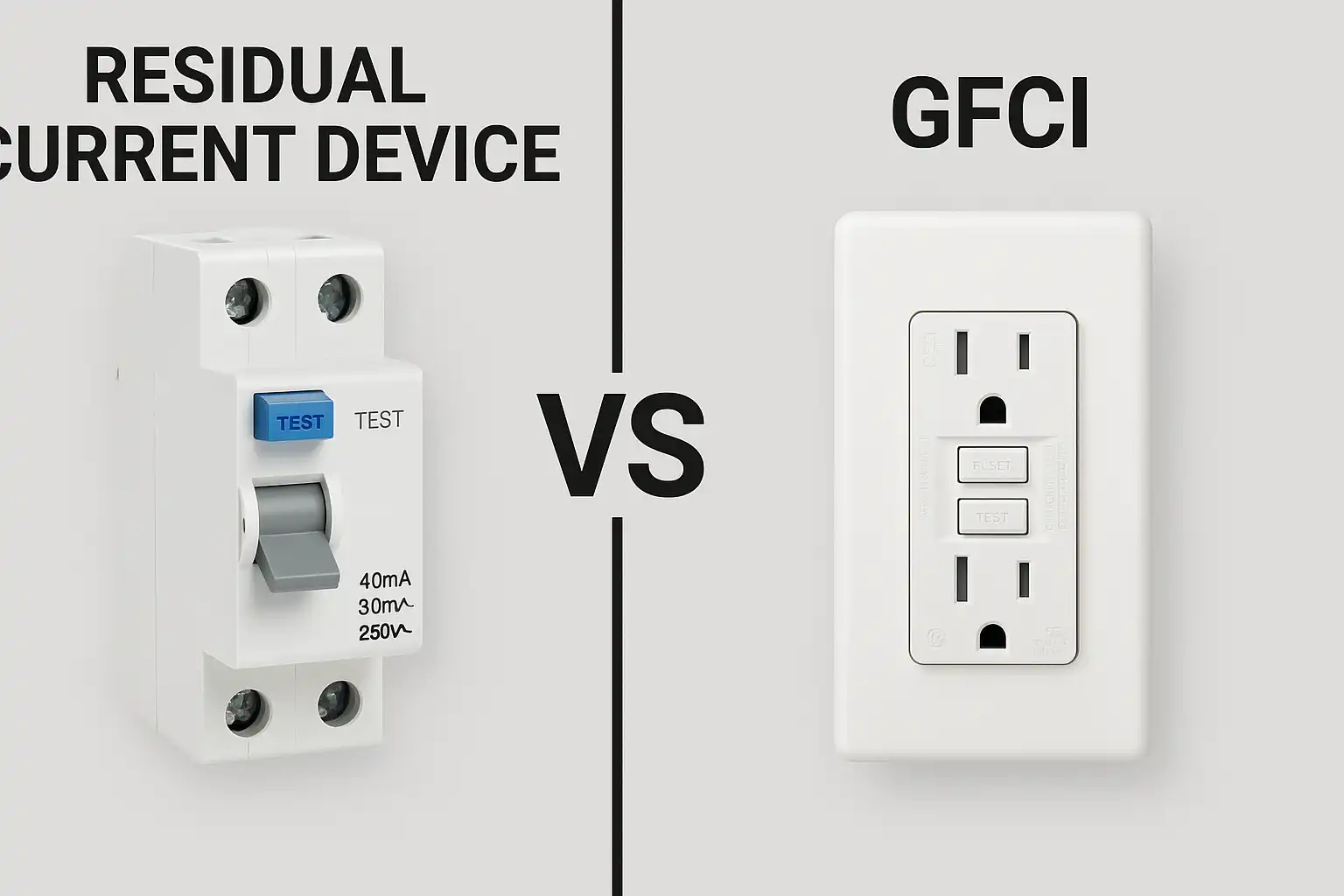
Critical Fact: When water creates a path to ground through you, even 30 milliamps of leakage will kill you in seconds. A GFCI senses that imbalance in 25 milliseconds and cuts power before your heart stops.
Operation Principle:
- Monitors current in (hot) vs current out (neutral)
- Detects imbalance as small as 5-30mA
- Trips in 25-40 milliseconds
- Prevents electrocution from ground faults
Required Locations:
• Within 6 feet of water sources
• Kitchens, bathrooms, laundry rooms
• Outdoor outlets, garages, basements
• Swimming pools and hot tubs
• Within 6 feet of water sources
• Kitchens, bathrooms, laundry rooms
• Outdoor outlets, garages, basements
• Swimming pools and hot tubs